Three Charity Work Jobs You Can Take

Written by Guest Blogger on April 20, 2013

Charity Tuesday banner, Tintagel

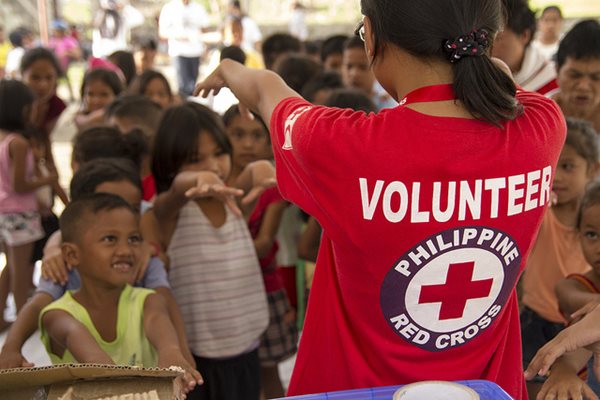
A career in doing charity work is a very fulfilling job choice. This is one job where everything you do contributes to the betterment of humanity. If you think charity work is only about volunteerism, then you’re very wrong. Charity work is a real job and people can build careers around it.

Here are some career choices you can make if you want to do charity work: Read the rest of this entry »

Categories: Jobs | Tags: , , , , , , ,

Leave a Comment

Charity on TV – Fundraising on Air

Written by Teresa Martinez on March 11, 2013

images (23)

Charity work is essentially about the voluntary giving of help or assistance to people who are in need. Systematic charitable work is carried out by organizations. In order for a charitable organization to pursue its objectives of helping the needy, it must be able to address its main concern about fundraising.

Charitable organizations usually have benefactors who may provide their main source of funding. However, it is quite possible that they will still need to do fundraising activities to further support their programs. One of the more popular forms of soliciting funds is charity on TV or fundraising on air.

Fundraising through TV is primarily carried out through Telethon events such as the UK Comic Relief and the Children in Need. A Telethon is basically a fundraising event which goes on television broadcast that may be held for a number of hours or days.  The main purpose of course is to raise money for a worthy cause.

A telethon is distinct in offering entertainment similar to a variety show while receiving pledges for donations.  The work itself is derived from the words television and marathon.  It has totally changed the face of fundraising from the basic face-to-face interaction to a highly technical way of moving funds from one source to the beneficiary.

images

On-air fundraising on TV makes use of the power of media to create awareness for a cause and provide a convincing call to action for viewers to give, donate, or contribute typically in cash.  Some telethons however also receive donations in kind especially for causes related to extensive natural disasters.  Through telethons, it has become easier for viewers to give.

Early forms of telethons mainly relied on pledges made over the phone.  Today, it is possible to text donations on the day of the telethon and the handling organization can report millions of dollars in raised funds within the same day.

Telethons can be done once for a specific purpose or annually for a much larger beneficiary group.  Causes such as those related to child welfare have continuous needs for funding and will require a systematic way of getting it.  An annual or even a semi-annual telethon is a good way to go about it.

TV is not merely limited entertainment as it can be used for more noble causes such as charity work.  Service providers such as DirectTVDeal.com have made it possible for viewers to have access to more TV shoes including charity TV shows.

About the Author:
Teresa is a researcher-writer who covers a wide range of topics in search of useful information to provide readers.


Image: fanpop.com

azbarez.com

Categories: Charities, Fundraising | Tags: ,

Leave a Comment

Charity Begins at Home

Written by Teresa Martinez on March 1, 2013

images (11)

We often hear that charity must begins at home.  Unless someone learns to show charity to family members, it is impossible for him or her to show charity to others.  We cannot give what we do not have.

Such is the truth.  One cannot feel true empathy for other human beings if it has not been learned at home.  It starts with the training of parents of children which will not only be through empty words but actual actions that can be emulated.  Action speaks louder than words, so they say.  Everything is learned more thoroughly when it is done and not merely mouthed for show.

Charity at home starts in giving not only of material things but of the time, attention, and care that would help develop healthy human beings.  Material things will not compensate for uncharitable acts at home.  Long after family members have grown old, memories will be that of the happiest and loneliest moments.

It is such a tragedy if the loneliest moments are caused by the failure to give a part of one’s self to another family member.  This failure is a serious failure of the essence of charity to work at home.  Families have to inspire in each other the desire to give in whatever form.

Charity learned at home will go a long way.  It will be part of a person wherever he or she goes.  The values in charity will never be unlearned even with exposure to other views in the real world.  Anyone who is unable to feel charitable to family members will find it difficult to feel charitable towards others.

About the Author:

Teresa is a researcher-writer who covers a wide range of topics in search of useful information.

Image: socialmoms.com

Categories: Families | Tags: ,

Leave a Comment

Healing With Mirrors

Written by Guest Blogger on February 9, 2013

Around the world today, there are people taking on valuable missions on their own to help other people. Some do get publicized a lot while the others don’t get much exposure. But just the same, they continue to pursue their mission with as much help they can get or sometimes through their own personal funds.

One very inspiring man pursuing a unique humanitarian mission is Stevo (Stephen Sumner) of Me & My Mirror.org. He is actively helping less fortunate people with disabilities notably in Southeast Asian countries. His main objective is to ease the suffering of amputees in poor and conflict-prone areas around the globe through the power of the mirror.

Stevo is an amputee himself who rides a cargo bicycle to deliver mirrors to amputees in the villages. The mirrors are no ordinary ones as they are hand-made and created using the acrylic material. His goal is to alleviate the so-called “phantom limb pain” normally experienced by amputees and improve their quality of life amid the depression and ostracizing they get from other members of their community.

Stevo is currently running a crowd fund raising campaign at StartSomeGood.com, he needs to reach the target of $5,000 for all the money to go to helping people in Cambodia who have lost limbs. Please give what you can.

me-and-my-mirror

This particular therapy using mirrors was started by VS Ramachandran in the 1990s. Ramachandran is one of the world’s renowned neuroscientists.

The mirror therapy uses a visualization technique that allows a patient to look at a mirror image of his limb in place of the one that was amputated. When this procedure is done regularly at least 10 minutes twice a day for about a month to five weeks, the amputee can be treated and cured for the rest of his life.

The therapy works by helping the brain re-wire and stop sending warning signals that causes the phantom limb pain. In fact, this form of treatment is now being utilized by the U.S. Military, the American Pain Foundation and the American Automobile Association.

Stevo believes that if only the less fortunate people in conflict-torn areas are given the chance to learn about this mirror therapy, many would greatly benefit from it. It is a very cost effective technique in that patients don’t need to buy medicines, visit the doctors or hospitals and travel to the town centers to seek treatment.

Stevo has initially helped amputees in Cambodia where landmines were widely used in the past through his own personal funds. He looks forward to collecting additional funds until February 15 from kind-hearted people to carry on his next mission for three months until May this year. Other Asian countries he plans to visit are Laos, Vietnam, Sri Lanka, India, Indonesia, Haiti and the Balkans among others.

About the author:
Teresa is a freelance blogger and mom of two. She gets inspiration from the success stories of people strongly supporting humanitarian campaigns.

Categories: Activities, Campaigns, Fundraising, Inspiration | Tags: , , , ,

Leave a Comment

Does Charity Always Help?

Written by Teresa Martinez on January 31, 2013

“Charity is injurious unless it helps the recipient to become independent of it.”  – John D. Rockefeller

When Rockefeller spoke these words, he knew that in such a noble deed as charity, there is still a risk of it being damaging to the recipients of the charity.  This is because of the possibility that they will become fully dependent on others and will no longer work on their own to improve their situation.  Givers of charity are therefore encouraged to assess if they are actually helping people in their acts of charity or simply encouraging them to be dependent on other people and institutions.

Acts of charity therefore are not always beneficial to the recipient.  This is specifically in situations where beneficiaries of charitable support are not taught to take care of themselves after the initial assistance.  Charity is also seen as non-beneficial when it merely becomes a band-aid solution to problems that require comprehensive changes.

It can be very difficult to associate negativity with something so noble as charity.  For how is it possible that something intended to help will turn out badly?  The problem is not in the intention.  It is usually with the implementation that something goes wrong.

Some people see a lack of fairness when donors and philanthropists have the power to choose the recipients of their charitable act.  Many believe that charitable works must be distributed according to real priorities and needs and not according to personal preference and choice.  But how does one argue with a donor?

There are also concerns about charity that comes with conditions.  This is related to requiring the recipients to do or not do a specific act in exchange for receiving the benefits.  If the conditions set are manipulative and violates human rights,  there are obvious contrasts to the noble purpose of charity.  If the conditions are set to ensure that the recipients truly benefit beyond the initial dole-out, then such conditions are deemed positive.

Image: howtospendit.ft


About the Author:

Teresa is a professional researcher-writer on a wide range of topics.

Categories: Charities | Tags: ,

Leave a Comment